The Year Everything Changed
A routine zoning matter becomes national news — and Murfreesboro's Muslim community finds out, in real time, how many neighbors stand with them.
First Sign Vandalized: “Not Welcome”
The sign reading “Future Site of the Islamic Center of Murfreesboro” is spray-painted with the words “Not Welcome.” The vandalism draws local media attention — and, just as quickly, an outpouring of support: a Murfreesboro sign company replaces the sign free of charge.
A Community Dinner, and Questions Answered
ICM hosts an informational dinner at the DoubleTree Hotel. More than 150 neighbors, friends, and local politicians attend. Staff share the history of Murfreesboro's Muslim community, its aspirations as an organization, and its plans for the new site, answering attendees' questions directly in what organizers describe as a show of full transparency.
A Three-Day Open House
ICM holds a three-day seminar and open house titled “Islam & Muslims,” advertised in advance in the Daily News Journal (DNJ). Sessions cover the history of Islam, the history of Murfreesboro's Muslim community, ICM members' religious practices, and the details of the proposed new development.
The Site Plan Is Submitted
On ICM's behalf, Neuhoff Taylor Architects files a request for approval of the full site plan, broken into a ten-year phased development — the same public process any other local institution would use to seek approval for new construction.
The Planning Commission Approves, Unanimously
On May 24, the Rutherford County Planning Commission unanimously approves the site plan for the new building. County law does not require a public hearing for religious construction projects, and none of ICM's opponents attend the meeting, though DNJ business reporter Doug Davis does. Around the same time, several other local religious buildings — including neighboring Grace Baptist Church — had been approved through the same process.
A Hearing, and a Backlash
More than 600 people attend the Rutherford County Commission's June 17 hearing, many to protest a site plan that had already been approved. During the public comment period, a number of unscheduled speakers say they hadn't known about the project until after approval; the two-hour hearing includes hostility directed at both ICM and Islam itself.
In the weeks that follow, several Tennessee politicians — including Lou Ann Zelenik, Bill Ketron, and Ron Ramsey — speak out publicly against the project, drawing national media attention as that year's elections approach. Ben Lemming, at the time a Democratic candidate for a vacant seat in Tennessee's 6th Congressional District, is among the few public figures willing to voice support for ICM.
Marches, a Billboard, and an Open House
A second site sign is run over by a truck and broken in half; no one is charged, and ICM opts not to replace it, even though several companies offer to do so for free.
On July 14, roughly 350 opponents of ICM march from Main Street to the Rutherford County Courthouse demanding the county void the building permit. The same day, a rally organized by Middle Tennesseans for Religious Freedom draws about 500 supporters from across the community — an early, visible sign of the backing ICM will continue to receive both locally and nationally in the months ahead.
A billboard opposing the Islamic center goes up on Old Fort Parkway and stays up for about thirty days. Later in the month, ICM holds an open house that draws more than 300 people, including several opponents; one attendee attempts to leave anti-Muslim literature inside the building.
Groundbreaking, National Attention, and Arson
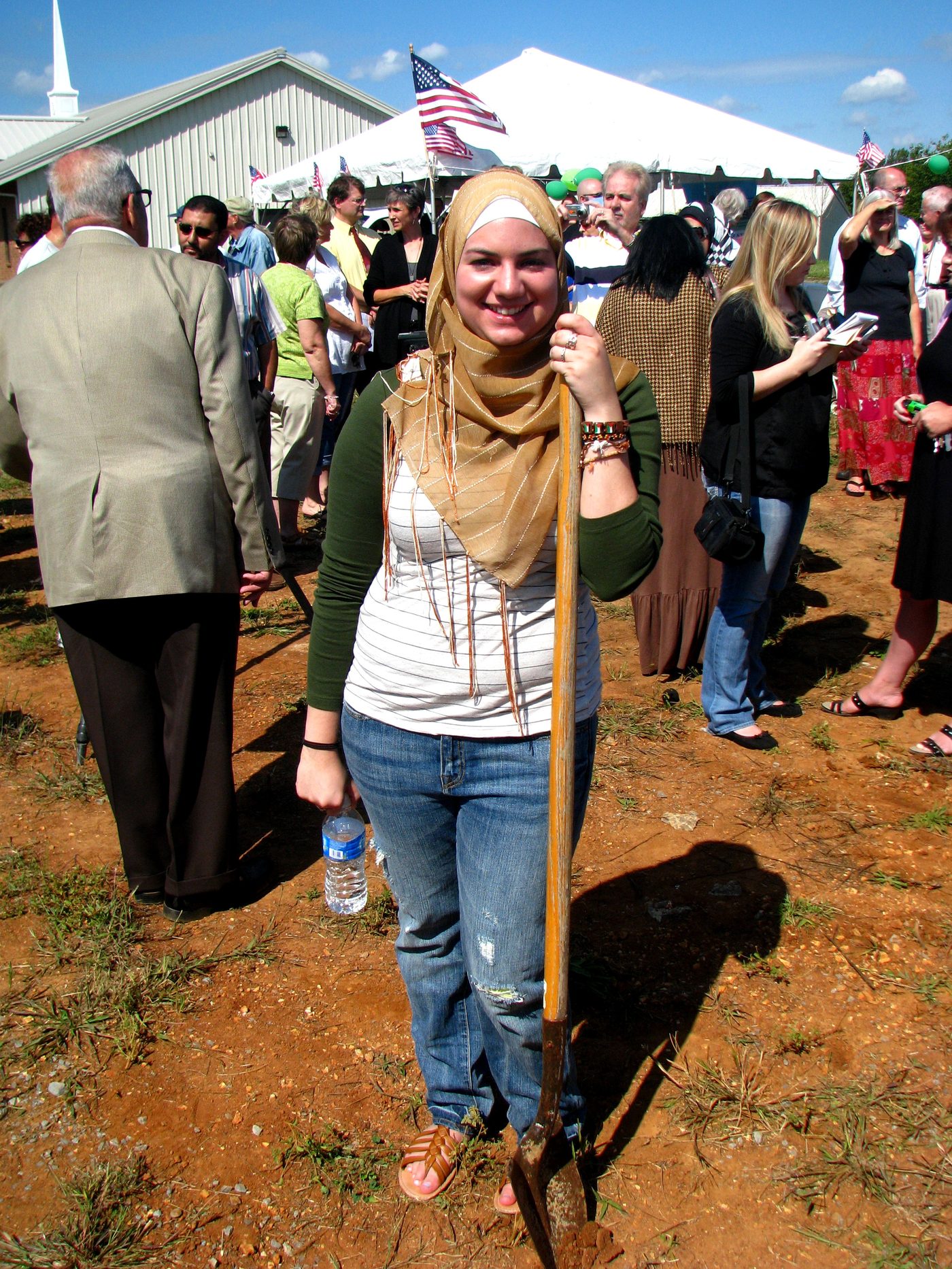
ICM breaks ground on site work on August 14, beginning the first phase of construction. Later that month, local NBC affiliate WSMV reports that televangelist Pat Robertson and co-host Terry Meeuwsen suggested on “The 700 Club” that a bribe may explain the county's approval of the project — remarks (“Imagine what $10,000 does to a small, local politician in a small, local town”) that draw further national coverage to Murfreesboro.
On August 26, an arsonist douses four pieces of construction equipment with an accelerant and sets one on fire, destroying it. The FBI and ATF open an investigation. Governor Phil Bredesen calls on Tennesseans to “please have respect for anyone's religious preferences and their right to practice those in the United States.”
Days later, more than 150 residents attend a candlelight vigil on the courthouse steps to protest the arson. Messages of support arrive from Christian neighbors, including some with sons deployed to Afghanistan, and are posted to a “wall of support” inside the building where the community has been gathering — alongside hundreds of letters, emails, and donations.
A Reward, a Pledge, and a Lawsuit
The FBI and ATF announce a $20,000 reward for information leading to the arsonist. At the county commission's September 16 meeting, supporters again turn out in force, worried the controversy is harming the town's reputation; Republican mayor Ernest Burgess argues that upholding ICM's rights is a matter of constitutional principle.
That same month, opponents of the project appear in Rutherford County Chancery Court seeking an injunction to stop construction, in a case led by lobbyist Laurie Cardoza-Moore's group, Proclaiming Justice to the Nation. Late in the month, more than twenty religious leaders from Middle Tennessee gather at ICM to share a meal and pledge their support.
The Justice Department Weighs In
The U.S. Justice Department's Civil Rights Division files an amicus brief responding to the allegations against Islam and ICM. The brief affirms that Islam is a religion entitled to First Amendment protection, and that Rutherford County was right to treat ICM's project the way it would treat any other proposed house of worship.
The Court Rules
On November 11, Chancellor Robert E. Corlew denies the request to void ICM's building permit and halt construction of the new center.